
Lipoderma in Newburgh, NY
Facial aging is influenced by several structural changes that occur over time. One of the most significant is the gradual loss of facial fat, which can lead to hollow areas, contour irregularities, and reduced definition in certain parts of the face. As fat volume decreases, the face may appear less youthful and balanced.
Modern regenerative treatments are designed to address these changes by restoring volume and supporting the body’s natural tissue structure. Lipoderma is an injectable treatment that uses a specialized adipose tissue matrix designed to support soft-tissue volume restoration in areas where natural fat is present.


4.9(383)
At Laser & Cosmetic Surgery Specialists in Newburgh, NY, Lipoderma treatments are performed by double board-certified facial plastic surgeon Ran Y. Rubinstein, MD. Patients from Orange County and throughout New York—including Middletown, Goshen, Cornwall, New Windsor, Monroe, Warwick, Poughkeepsie, Fishkill, Kingston, and New Paltz—visit the practice for advanced facial plastic surgery and non-surgical facial rejuvenation treatments.





What Is Lipoderma?
Lipoderma is an injectable treatment derived from processed adipose tissue matrix. During processing, the native cellular components and structural elements of the extracellular matrix are preserved, while immunogenic components are removed.
When injected beneath the skin, this adipose matrix provides structural support within the tissue. The matrix gradually integrates with surrounding tissue and helps restore localized soft-tissue volume in areas where fat loss or contour irregularities are present.
Because Lipoderma works through tissue integration rather than simply placing filler material beneath the skin, the treatment differs from traditional dermal fillers that provide immediate volumization.
What Concerns Can Lipoderma Treat?
Lipoderma is designed to address small areas of soft-tissue volume loss or contour irregularities where fat normally exists.
Common concerns that may be treated include:
- Localized facial volume loss
- Small depressions in the skin
- Mild contour irregularities
- Subtle facial asymmetry
- Depressions associated with scarring or previous procedures
Because Lipoderma works through gradual tissue integration, it is typically used for smaller corrections rather than large structural augmentation.


Where Can Lipoderma Be Used?
Lipoderma is most appropriate in areas of the face where natural fat tissue is present and where subtle volume restoration may improve facial balance.
Common treatment areas may include:
- Small depressions in the cheeks
- Localized contour irregularities in the face
- Regions affected by mild volume loss
- Areas influenced by scarring or prior procedures
- Subtle asymmetries in facial contours
During consultation, Dr. Rubinstein evaluates the patient’s facial anatomy and determines whether Lipoderma or another injectable treatment will provide the most natural and predictable results.
-

- JoAnn Norris
4.9(383)

4.7(87)

4.8(191)

4.8(114)
Schedule a Consultation
If you are looking to restore youthful volume and address facial fat loss, schedule a consultation at Laser & Cosmetic Surgery Specialists in Newburgh, NY. Dr. Ran Y. Rubinstein uses Lipoderma, an advanced adipose tissue matrix, to naturally support and revolumize hollow areas for a more balanced appearance.
How Lipoderma Works
Lipoderma is based on an adipose extracellular matrix that resembles the structural framework of natural fat tissue. The treatment works through several stages.
Injection of the Adipose Matrix
A small amount of the adipose matrix is carefully injected beneath the skin in the treatment area.
Structural Support Within the Tissue
Once placed, the matrix provides structural support within the tissue and helps fill localized areas of soft-tissue volume loss.
Gradual Tissue Integration
Over time, the matrix integrates with surrounding tissue and contributes to improved contour and volume in the treated area.
Because this process occurs gradually, improvements typically appear over several months rather than immediately after treatment.

Lipoderma vs. Other Injectable Treatments
Facial rejuvenation often involves injectable treatments designed to restore volume or improve skin structure. Lipoderma is delivered through injections but works differently than many traditional injectable options used in aesthetic medicine.
Dermal Fillers
Dermal fillers restore volume by placing a gel-like substance beneath the skin. Hyaluronic acid fillers are commonly used to enhance facial contours or smooth wrinkles.
Dermal fillers:
- Provide immediate volume correction
- Typically consist of hyaluronic acid
- Results often last several months to over a year depending on the product
Biostimulatory Injectables
Biostimulatory treatments such as Sculptra and Radiesse work by stimulating collagen production within the skin. As collagen develops, the skin becomes thicker and more structurally supported.
Biostimulants:
- Stimulate collagen production
- Improve skin structure and firmness
- Results develop gradually over time
Lipoderma
Lipoderma works through a different mechanism. Instead of simply adding filler material or stimulating collagen production, it provides an adipose tissue matrix that supports tissue integration and soft-tissue volume restoration.
Lipoderma:
- Derived from processed adipose tissue and extracellular matrix
- Provides structural support within the tissue
- Supports gradual soft-tissue volume restoration
- Results develop progressively as the tissue integrates
Each treatment option has unique advantages. During consultation, Dr. Rubinstein recommends the most appropriate treatment based on the patient’s anatomy, goals, and long-term facial balance.

Who Is a Good Candidate for Lipoderma?
Lipoderma may be appropriate for individuals who want to restore subtle facial volume without undergoing surgery.
Good candidates often include people who:
- Have mild to moderate localized facial fat loss
- Want gradual, natural-looking improvement
- Prefer a non-surgical treatment option
- Have small contour irregularities or depressions
- May not require fat grafting surgery
Because results develop gradually, patients should understand that improvements occur over time.
Consultation and Personalized Treatment Planning
Every Lipoderma treatment begins with a consultation with Dr. Rubinstein. During this visit, he carefully evaluates facial anatomy, skin quality, and areas of volume loss.
Not every patient is an ideal candidate for Lipoderma. In some cases, dermal fillers, biostimulants, or surgical procedures such as fat grafting may provide more predictable results. Dr. Rubinstein reviews available options and recommends a treatment plan tailored to the patient’s goals and facial structure.
Patients also have the opportunity to discuss expectations, recovery, and potential outcomes during the consultation.
The Lipoderma Treatment Process
Lipoderma injections are performed in the office and typically require less than an hour depending on the treatment area.
Preparation
The treatment area is cleansed and a local anesthetic may be used to improve comfort during the procedure.
Injection
The adipose matrix is carefully injected beneath the skin to restore localized volume or improve contour irregularities.
After Treatment
Most patients return to normal daily activities shortly after treatment.
Recovery After Lipoderma Injections
Recovery following Lipoderma injections is typically minimal. Temporary effects may include:
- Mild swelling
- Minor bruising
- Temporary tenderness at the injection site
These symptoms generally resolve within several days.
Because Lipoderma works through gradual tissue integration, improvements become more noticeable over time rather than immediately after treatment.
When Will Lipoderma Results Appear?
Lipoderma results develop gradually as the adipose matrix integrates with surrounding tissue.
Patients may begin to notice improvements in contour and volume over several months as the treated area stabilizes and integrates.
Because the treatment relies on tissue integration, improvements typically appear progressively.
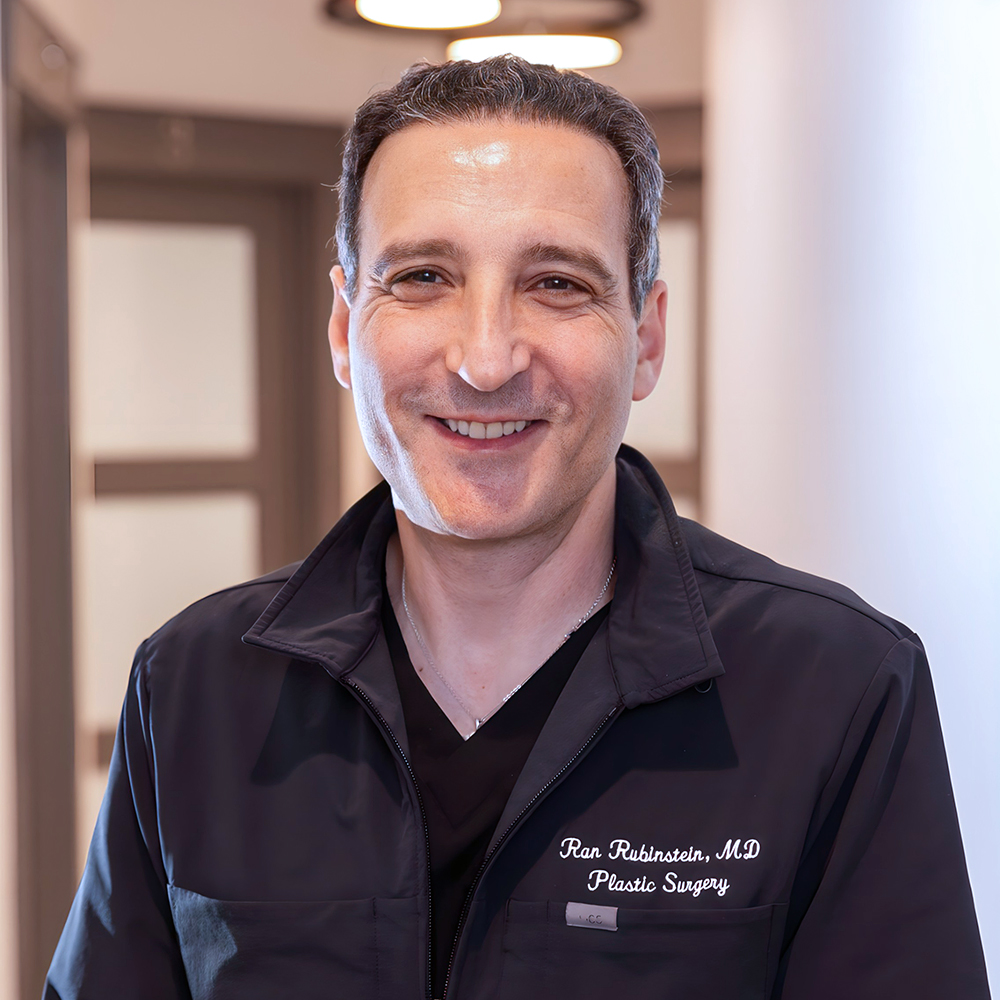
Why Choose Dr. Ran Y. Rubinstein for Lipoderma?
Ran Y. Rubinstein, MD is a double board-certified facial plastic surgeon specializing exclusively in facial aesthetic procedures.
His approach to injectable treatments emphasizes precision, facial harmony, and natural-looking results. Every treatment plan is tailored to the patient’s facial anatomy and long-term aesthetic goals.
At Laser & Cosmetic Surgery Specialists in Newburgh, patients benefit from a physician-led aesthetic practice offering both advanced facial plastic surgery and non-surgical facial rejuvenation treatments. Comprehensive MedSpa services are also available, including customized skincare plans, medical-grade products, and advanced non-surgical rejuvenation treatments under physician supervision.